

01
</>
APPLICATION
Application Development
We understand how business applications are built and how their architecture can evolve.

Your application may be old, but that doesn't mean it needs to be replaced.
Oracast modernizes existing business applications by upgrading technology, improving security and performance, connecting systems, reducing technical debt and preparing applications for new capabilities - including AI.
We preserve the business logic, data and workflows your organization depends on while improving the technology underneath them.

Application modernization is the process of updating an existing business application to improve its technology, architecture, security, performance, integrations and maintainability while preserving the business functionality and data the organization depends on.
Modernization can involve upgrading the underlying technology, improving the application's architecture, replacing outdated dependencies, improving the database, creating APIs, strengthening security, improving performance, connecting third-party systems or adding new capabilities such as AI.
Modernization does not necessarily mean rebuilding everything. The goal is to identify what should be preserved, what should be improved and what should be replaced.
Many business applications continue to run for years after the technology underneath them has become outdated.
The application may still perform its core job, but maintenance becomes increasingly difficult and new functionality becomes harder and more expensive to add.
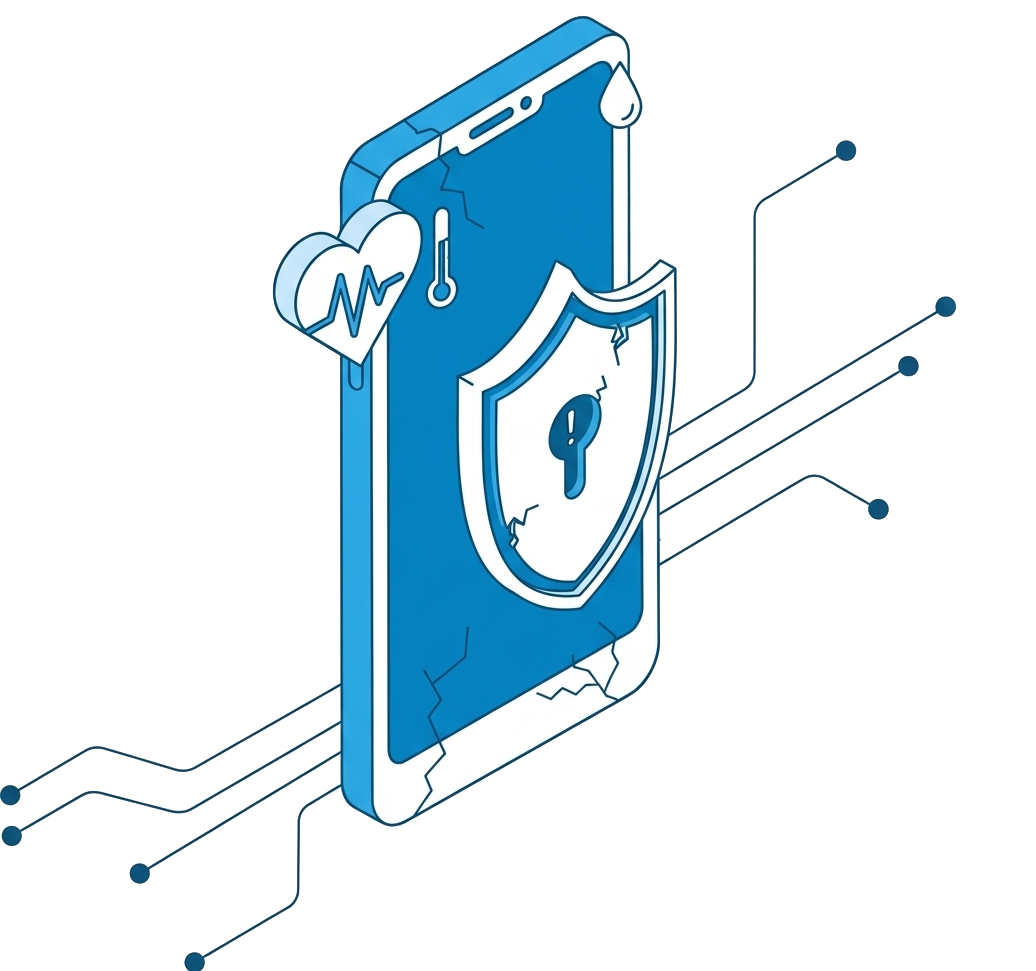
Your application may be a modernization candidate if you have:
The application itself may not be the problem. The underlying technology may simply need to catch up with the business.
A business application contains more than code.
It contains years of business rules, workflows, data, integrations and processes that have evolved with the organization.
A modernization project can preserve that knowledge while improving the technology that supports it.
Modernization is not about making everything new. It's about making what already works ready for what's next.


Every application is different. We identify the areas creating the most risk, cost or limitation and modernize them in a practical sequence.
Upgrade outdated:
Improve:
Improve:
Address:
Connect applications with:
Improve:
Modernization does not have to happen all at once.
We identify the highest-value improvements and create a practical roadmap for moving the application forward.
We don't recommend AI simply because AI is available. We look for places where it can materially improve a business process.

AI works best when an application has reliable data, modern integrations, clear permissions and accessible business information.
Modernization can create the technical foundation needed to safely introduce AI later—or integrate it as part of the modernization project.
AI needs access to useful business information.
Modernization can improve:
AI becomes more useful when it can work across systems.
Modern APIs make it easier to connect:
AI should only access information and perform actions it is authorized to access.
We can design for:
The goal isn't simply to make an application newer. It's to make it capable of supporting the business for the next several years.
Adding a chatbot to an application is only one possible use of AI.
We look at how employees and customers actually use the application and identify opportunities where AI can make information easier to access, decisions easier to make and workflows easier to execute.
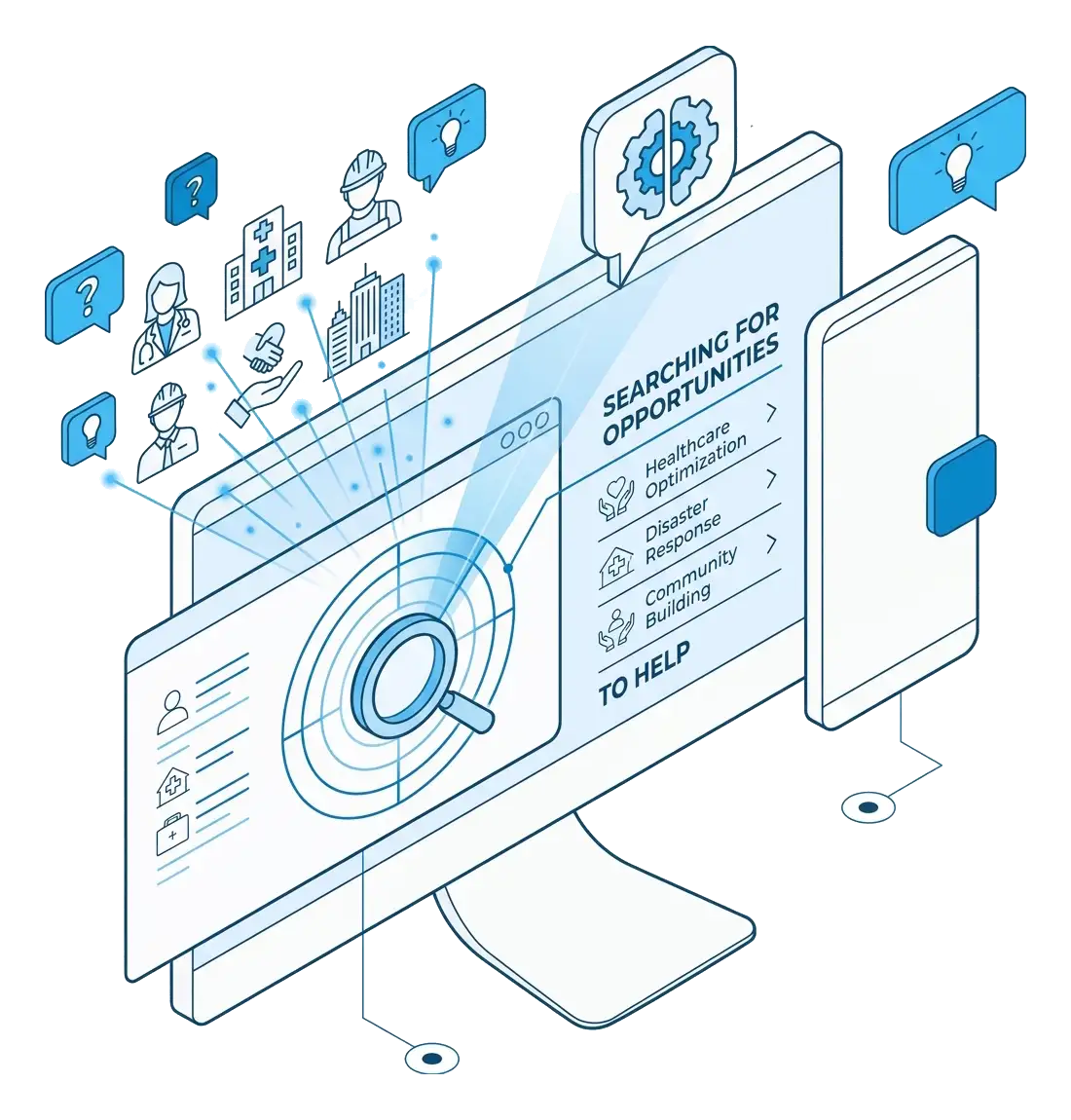
Business applications rarely operate alone.
They often exchange information with accounting platforms, CRM systems, payroll systems, ERP platforms, document systems and industry-specific software.
Modernization is an opportunity to improve those connections.
Integration Categories
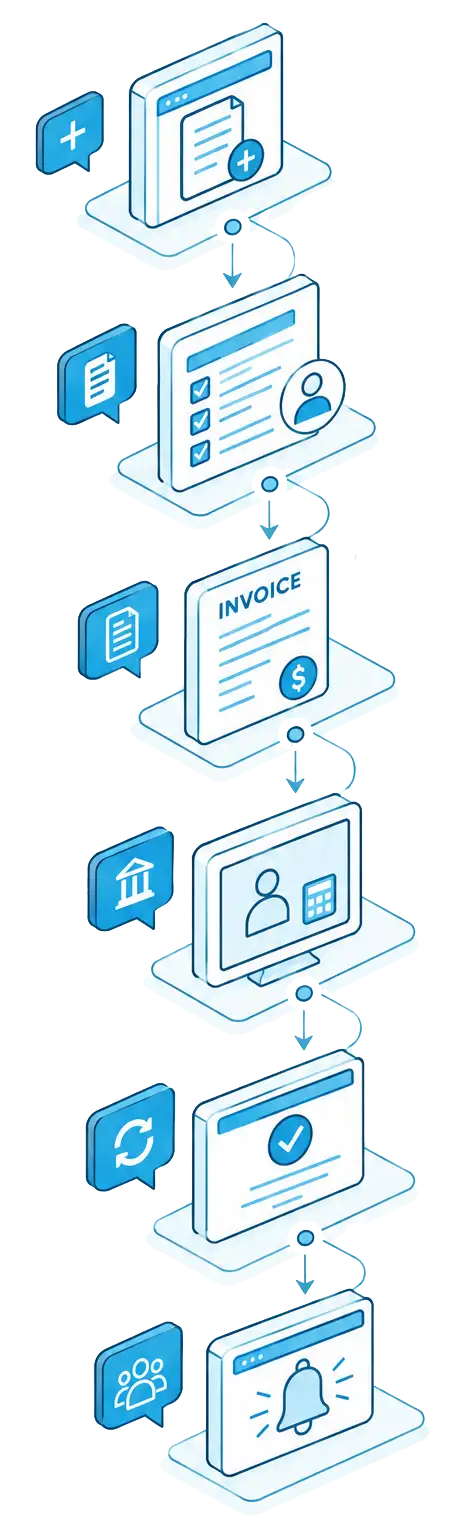
Create a job → collect information → generate an invoice → send it to accounting → receive status information → notify staff
Once systems are connected, AI can potentially work across them.
For example:
"Which completed jobs from yesterday haven't been exported to accounting?"
or:
"Find invoices that were rejected and explain why."
The long-term opportunity isn't just an application that works better. It's an application that can understand and interact with the systems around it.
Modernization opportunities exist across many types of business applications.
Modernize scheduling, dispatching, workflows, reporting and operational systems.
Potential improvements:
Modernize systems that exchange financial information.
Potential improvements:
Modernize applications used by employees in the field.
Potential improvements:
Modernize systems that rely heavily on documents and manual data entry.
Potential improvements:
Modernize customer-facing systems.
Potential improvements:
The technology needs to work with the business processes, infrastructure, users and systems surrounding the application.
Oracast brings those disciplines together.
We understand how business applications are built and how their architecture can evolve.
We can manage the hosting environment, deployments, backups, monitoring and infrastructure supporting the application.
We consider security throughout modernization—from dependencies and access control to infrastructure and application configuration.
We can identify and implement practical AI capabilities using modern AI models and APIs.
You don't need to find separate teams for your application, infrastructure and AI strategy.

Modernization is not a one-time event.
Applications continue to change as technology, security requirements and business needs evolve.
Once your application has been modernized, Oracast can continue managing and maintaining it.
Ongoing application management can include:
Dedicated assistance with rapid SLA response times for high-priority incidents and developer inquiries.
For applications that use AI, we can also monitor and maintain:
Continuous uptime and response telemetry for AI integrations.
Prevent token usage spikes and manage API deprecation lifecycles.
Management of vector stores, knowledge pipelines, and multi-step agents.
Evaluation, prompt tuning, and regression mitigation.
Modernize code bases, improve performance, continuously monitor and maintain health, and safely embed AI capabilities - all while protecting the core workflows and business data you depend on.
Explore App CareBefore deciding whether to rebuild, replace or modernize an application, it helps to understand what you already have.
A comprehensive evaluation across technical, operational, and strategic vectors.
Core structural audit and code foundations.
Risk mitigation and infrastructure stability.
Alignment with operational requirements.
Future-proofing & AI intelligence insertion.

The outcome of an assessment is an aligned execution strategy.
Critical vulnerabilities, security risks, and breaking bottlenecks.
Architecture refactoring, framework upgrades, and cloud migration.
Non-essential updates that can be deferred without business impact.
Intelligent automation, RAG workflows, and predictive analytics.
No. Modernization can range from targeted upgrades to major architectural changes.
The appropriate approach depends on the application's technology, condition, business requirements and future goals.
Yes.
Oracast can assess and modernize existing applications regardless of who originally developed them.
The first step is understanding the application's architecture, code, infrastructure, dependencies and business requirements.
Often, yes.
Whether the existing database should be retained, upgraded, migrated or redesigned depends on its technology, structure, performance, security and long-term requirements.
You don't necessarily need to replace an application that your business already depends on.
Modernize the technology. Improve the foundation. Connect your systems. Add new capabilities. Introduce AI where it makes sense.
Talk to Us About Modernizing Your Application